

Treatment guidelines recommend that psychotherapy be used in conjunction with pharmacotherapy in children with bipolar disorder. A well-established category of psychotherapy is family skill-building plus psychoeducation; 3 examples of this are family-focused treatment, psychoeducational psychotherapy, and child- and family-focused cognitive-behavioral therapy. These treatments share several common elements that are important in pediatric populations, including being family-based, providing psychoeducation on symptoms and their management, and training patients and families in emotion regulation, communication, and problem-solving skills. Clinicians may also wish to explore nutritional interventions; multinutrient complexes are experimental, and omega-3 fatty acid supplements are possibly efficacious. Nutritional interventions are particularly attractive in this patient population because of their favorable safety profile.
The Journal of Clinical Psychiatry
Supplement Article September 15, 2016
Evidence-Based Psychotherapies and Nutritional Interventions for Children With Bipolar Spectrum Disorders and Their Families
J Clin Psychiatry 2016;77(suppl E1):e04
Article Abstract

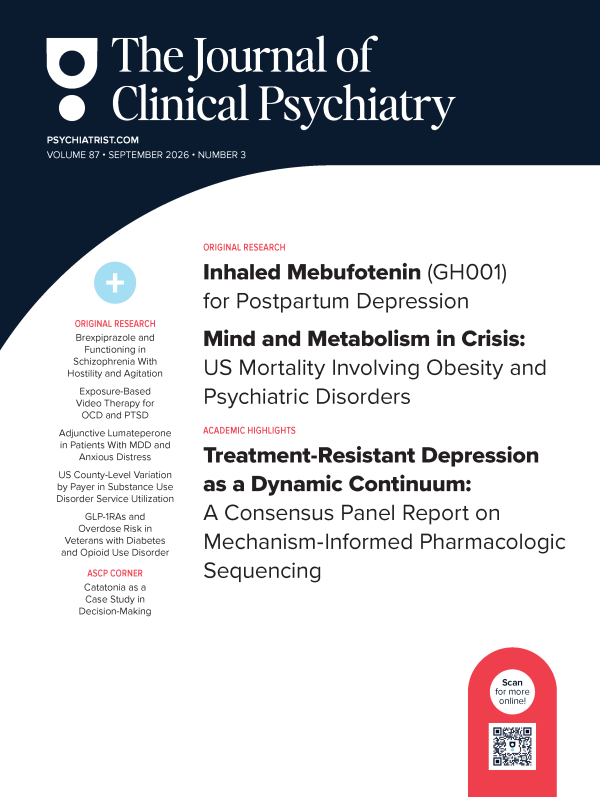
Vol 87 • 2026 • Number 3
Read the Current Issue
Original Research
Inhaled Mebufotenin (GH001) for Adult Patients with Postpartum Depression
Original Research
US Mortality Involving Obesity and Psychiatric Disorders
Academic Highlights
Treatment-Resistant Depression as a Dynamic Continuum: A Consensus Panel Report
Original Research
Effects of Brexpiprazole on Functioning in Patients with Schizophrenia Who Have Hostility and Agitation Symptoms
Original Research
Exposure-Based Video Therapy for OCD and PTSD
Original Research